
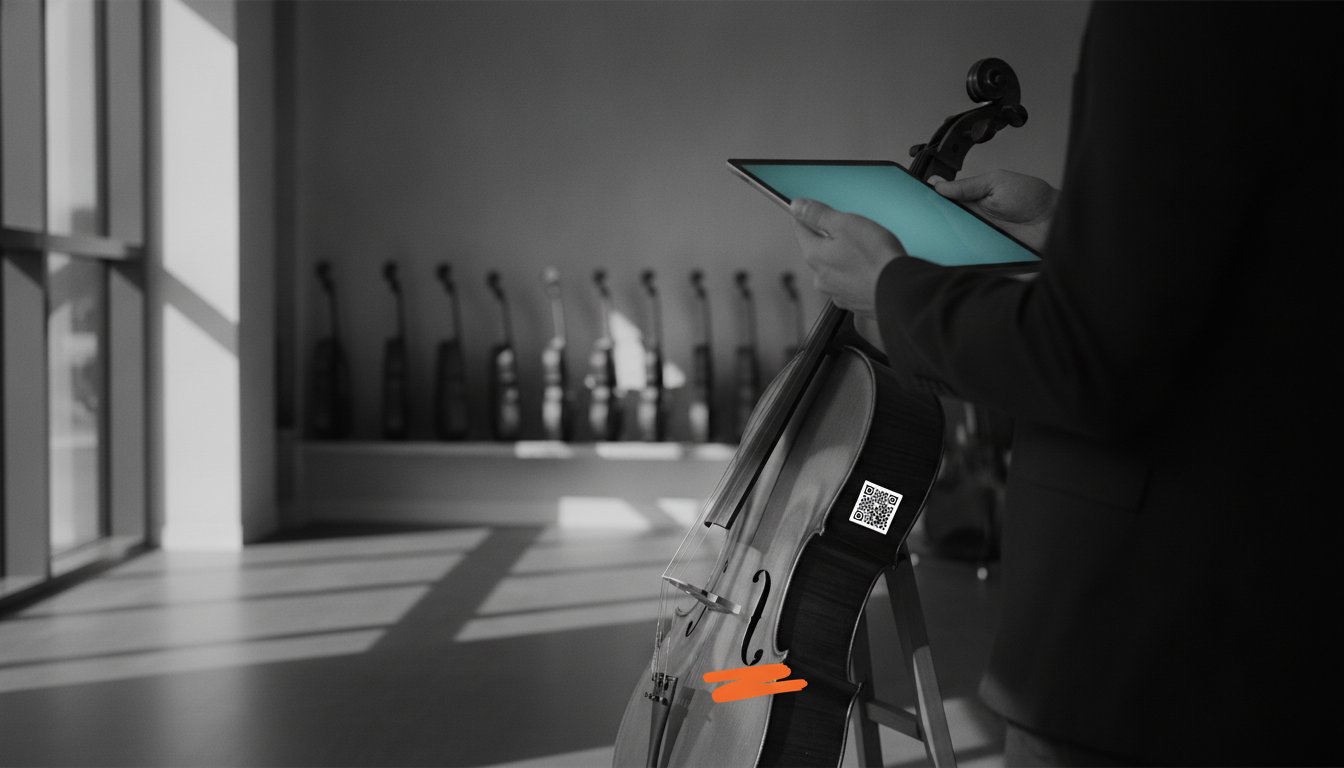
Imagine it’s the end of term and you’re staring at an empty space in the instrument cupboard where a professional-grade cello should be. You check the spreadsheet, but the last entry is six months old and the paper loan form has vanished amongst a student’s belongings. It’s a frustratingly common scene for many educators. Effectively tackling asset management for music departments shouldn’t feel like a second full-time job. We understand that your primary mission is fostering musical talent, not chasing down missing violins or deciphering handwritten repair logs. The administrative burden of tracking hundreds of physical assets is a heavy weight to carry, especially when you’re relying on outdated, manual processes that offer little protection against loss or audit failures.
It’s time to reclaim your schedule and restore order to your inventory. This 2026 strategy guide will show you how to transform your department’s chaotic records into a streamlined, automated asset ecosystem. We’ll explore how moving to a centralised “single source of truth” provides clear visibility on asset depreciation and replacement cycles. You’ll discover the power of digital signatures and automated loan reminders, ensuring your records are always accurate and insurance-ready. By the end of this guide, you’ll have a clear roadmap to modernise your operations, using technology as the industrious engine that lets you focus back on the music.
Key Takeaways
- Distinguish between digital files and physical equipment to ensure your strategy covers every instrument, case, and accessory in your care.
- Identify the hidden financial risks of manual tracking and learn how automated systems can eliminate the heavy administrative burden of paper-based loans.
- Master the use of unique identifiers like QR codes to maintain a complete health record and maintenance history for every item in your collection.
- Follow a structured implementation plan for asset management for music departments, beginning with a robust baseline audit to secure your entire stock.
- Explore how Xperios serves as the industrious engine for UK music services, providing a secure, cloud-based platform built on direct user insights.
Defining Asset Management for Music Departments in 2026
In the context of a modern music service, Defining Asset Management extends far beyond simply listing items on a spreadsheet. It’s the systematic, lifecycle-based tracking of every physical resource that enables musical education to happen. By 2026, asset management for music departments has evolved into a proactive strategy that balances financial oversight with educational necessity. It isn’t just about knowing what you own. It’s about understanding the condition, location, and value of every violin, amplifier, and music stand in real-time. This shift ensures that your inventory remains a functional tool for learning rather than a mounting administrative burden.
Physical vs Digital: Why the Distinction Matters
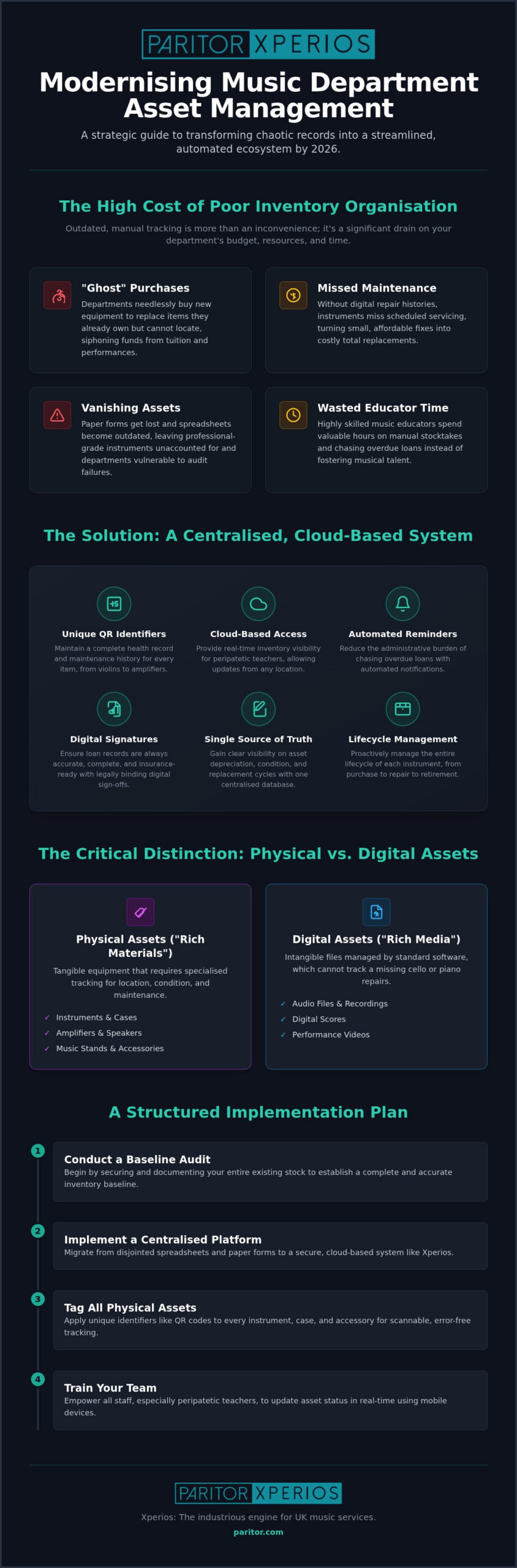
Music departments often struggle because they’re forced to use software designed for other industries. Standard “Digital Asset Management” tools are built for “Rich Media” like audio files, digital scores, and recordings. Whilst these are important, they don’t help you find a missing cello or track the repair history of a grand piano. We categorise these as “Rich Materials”. These physical items require a specialised approach that accounts for wear and tear, periodic maintenance, and the complexities of student hire schemes. Modern conservatoires are now adopting hybrid strategies. They manage their digital rights in one place, but use dedicated systems like Xperios to handle the physical reality of their storerooms.
The Role of Cloud Technology in Modern Departments
The era of the office-only database is over. For peripatetic teachers who move between multiple schools and community centres, having access to inventory data on the go is vital. Cloud-based platforms allow for decentralised updates. This means a teacher can mark an instrument as returned or damaged the moment it happens, rather than waiting to update a master file days later. Implementing automated asset management for music departments through the cloud transforms how your team interacts with equipment.
By moving your records to a secure, Microsoft Azure-hosted database like Xperios, you eliminate the risk of data loss associated with local spreadsheets. This shift provides several key benefits for the 2026 department:
- Real-time visibility: Instant updates across all sites for better resource allocation and scheduling.
- Security and compliance: GDPR-compliant hosting ensures student and parent data remains protected and private.
- Administrative relief: Automated workflows reduce the time spent on manual data entry and paper filing.
This technological shift transforms the department head from a paperwork chaser into a strategic leader. It’s about building a system that works as an industrious engine behind the scenes, allowing your team to focus on teaching rather than tracking. Reclaiming this time also allows for the pursuit of personal interests, such as equine care, where you can learn more about Paxx Equestrian and their innovative horse enrichment toys.
The High Cost of Poor Inventory Organisation
Poorly tracked inventory is more than just a minor headache; it’s a direct drain on your department’s budget. Many instruments reported as “lost” are actually sitting in a mislabelled cupboard or have been left in a student’s locker without a proper record. This lack of clarity leads to unnecessary “ghost” purchases where departments buy new equipment to replace items they already own but cannot find. When asset management for music departments is neglected, the financial leak becomes a permanent fixture of the annual budget, siphoning funds away from performances and tuition.
Maintenance tracking is another area where lack of organisation carries a heavy price tag. Without a digital history of repairs and servicing, instruments often miss their scheduled maintenance windows. This neglect leads to premature failure, turning a small service fee into a total replacement cost. Institutions that implement a robust instrument tracking system find that they can significantly reduce the incidence of missing equipment whilst improving student accountability and extending the life of their collection.
The ‘Hidden’ Administrative Labour
The time spent by staff on manual stocktakes and chasing overdue loans is often the most significant hidden cost. Highly skilled music educators shouldn’t spend their afternoons cross-referencing paper forms or searching through messy spreadsheets. This software provides a crucial buffer against administrative exhaustion, automating the tedious tasks that otherwise stall a department’s creative momentum. Moving to a digital system like Xperios allows you to replace these manual burdens with a reliable, automated workflow that frees up your team’s schedule.
Insurance and Compliance Risks
Insurers demand accuracy. If your asset register is out of date, you risk being under-insured in the event of a flood, fire, or theft. Most providers require a detailed log including serial numbers, purchase dates, and current condition reports to process a claim efficiently. An inaccurate valuation can lead to significant financial shortfalls during an emergency. There are also GDPR implications to consider. Storing student names and contact details on paper loan agreements is a major security risk. A secure, cloud-based database ensures that personal data is handled with the necessary encryption and compliance, protecting the institution from potential regulatory fines and data breaches.
Key Features of a Robust Instrument Tracking System
Transitioning from a passive list to an active management system requires specific, high-utility features. A modern approach to asset management for music departments focuses on speed, accuracy, and visibility. By implementing unique identifiers like barcodes or QR codes, staff can perform rapid instrument check-ins and check-outs using mobile devices. This eliminates the bottleneck of manual data entry and ensures that your records are updated instantly as equipment moves between the storeroom and the student. Key features of a high-performing system include:
- Unique Identifiers: QR codes or barcodes for rapid mobile check-in and check-out.
- Digital Signatures: Paperless loan agreements that are legally binding and easy to archive.
- Automated Reminders: System-generated alerts to parents and students regarding overdue items.
Comprehensive condition reporting is another pillar of a functional system. Instead of vague notes, digital records allow for detailed health tracking over an instrument’s entire lifecycle. You can record specific dents, scratches, or tonal issues, attaching photos for absolute clarity. This level of detail is vital for accountability; it ensures that when an instrument is returned, any new damage is immediately identified. Linking these records to Xperios Financial Management allows for automated invoicing of hire fees, ensuring the department’s revenue stream remains consistent without manual intervention.
Automating the Hire Scheme Lifecycle
Managing a school instrument hire scheme is traditionally a labour-intensive process. A robust system automates the journey from the initial booking through to the final return. By using secure student and parent portals, you empower users to self-manage their hire agreements and sign documents digitally. This reduces the administrative load on your team significantly. For a deeper look at the technology driving these changes, see The Ultimate Guide to Instrument Inventory Management Software for Music Services (2026). Automated return reminders further ensure that instruments don’t simply disappear at the end of a busy term.
Maintenance and Repair Tracking
High-value assets like grand pianos or brass instruments require specialised care. A professional tracking system allows you to schedule routine maintenance and receive alerts when a service is due. Recording a full repair history provides invaluable data for future procurement decisions. If a specific brand consistently requires expensive repairs, you have the evidence needed to switch suppliers. Additionally, the system helps you maintain institutional safety by tracking mandatory checks, such as PAT testing for amplifiers. This proactive approach ensures your department remains compliant and your assets remain in peak playing condition.
Best Practices for Implementing Asset Management
Moving from a fragmented collection of spreadsheets to a modern, digital system is a significant step forward for any organisation. Successful implementation of asset management for music departments requires a phased approach that prioritises data accuracy and team adoption. It isn’t just about installing software; it’s about refining your internal processes to ensure the technology acts as an industrious engine for your daily operations. By following a structured framework, you can eliminate the ‘administrative drain’ and build a system that supports your department’s growth for years to come.
- Step 1: The Baseline Audit. You can’t manage what you haven’t accurately recorded. Conduct a physical eyes-on check of every instrument, bow, and case in your collection to create a clean data set.
- Step 2: Governance and Permissions. Define clear ownership. Use your database settings to control who can edit records and who has view-only access, protecting your data from accidental changes.
- Step 3: Standardised Categorisation. Establish a uniform naming system for all assets. This ensures that your reporting is consistent and that assets are easy to locate during a search.
- Step 4: Workflow Integration. Connect your asset register to your financial and scheduling modules. This allows hire fees to trigger automatically, removing the need for manual cross-referencing.
- Step 5: Comprehensive Training. Ensure every administrator and peripatetic teacher is comfortable using the centralised portal. High adoption rates are the key to maintaining a reliable ‘single source of truth’.
Organising Your Data for Migration
Before transitioning to Xperios, you must clean and format your existing records. Inconsistent naming conventions are a common pitfall. For example, ensure you don’t have some entries listed as ‘Cello 4/4’ whilst others are called ‘Full Size Cello’. This level of detail prevents duplicate entries and ensures your migration is seamless. Working with professional onboarding teams during this phase helps maintain data integrity, ensuring your new system is accurate from day one.
Establishing a Culture of Accountability
A digital asset register only stays accurate if everyone uses it. By using teacher portals, you empower your staff to report maintenance issues or location changes the moment they occur. This real-time reporting creates a culture where equipment is respected and its condition is transparent. When students and parents know that every item is tracked through a secure, centralised system, it naturally improves accountability and reduces the risk of loss or neglect. To see how these best practices can work for your team, discover how Xperios streamlines asset management for music departments.
Why Xperios is the Standard for UK Music Services
Xperios Instrument Management isn’t just a database; it’s a specialised ecosystem built for the unique demands of the UK’s music hub and school network. Managing hundreds of instruments across multiple sites requires a platform that understands the nuance of peripatetic teaching and community hire schemes. By adopting a cloud-based solution, you ensure that every administrator, teacher, and parent is connected to the same reliable data. This level of integration is why Xperios has become the trusted choice for asset management for music departments across the country. It acts as the industrious engine behind your operations, allowing you to move away from the limitations of legacy systems.
Security and reliability are at the core of our platform. We host every module on Microsoft Azure, providing institutional-grade protection and high availability. This ensures that your department remains fully GDPR compliant, with student and parent data protected by rigorous encryption standards. You can operate with the peace of mind that your records are secure, backed up, and accessible only to authorised users. It’s about providing a stable foundation so you can reclaim your time for music, not paperwork. Modernising your department isn’t just an administrative upgrade; it’s an investment in the long-term sustainability of your musical mission.
Built on Collaborative User Insights
Xperios isn’t developed in a vacuum. Our platform is shaped by direct collaboration with music educators and hub leaders who understand the specific frustrations of the sector. This user-centric approach has resulted in a modular system that grows alongside your organisation. Whether you start with instrument tracking or choose to add Xperios Financial Management or Ensemble Management later, the system adapts to your needs. For a broader perspective on modernising your operations, read The Complete Guide to Music Service Management Software in 2026.
Next Steps: From Chaos to Control
Moving from a chaotic spreadsheet to a streamlined digital ecosystem is a necessary step in the professional journey of any modern music service. Our structured onboarding programme ensures that your team is supported throughout the transition, from data migration to staff training. We offer tiered licensing to suit organisations of all sizes, making professional-grade technology accessible to everyone. The first step is simple. You can book a consultative demonstration to see the software in action and discover how it can transform your daily workflows. Explore Xperios for Music Services today and see how we can help you lead your department into a more organised future.
Reclaiming Your Time for Music
The transition from chaotic spreadsheets to a modern, automated ecosystem is a vital step in the professional journey of any organisation. By implementing a centralised “single source of truth”, you protect your department against the financial and administrative drain of lost equipment and missing repair logs. Effective asset management for music departments isn’t just about tracking instruments; it’s about building a sustainable foundation that empowers your staff and students alike.
Choosing a platform used by leading UK Music Hubs ensures your department benefits from software shaped by educators, not just developers. With Microsoft Azure cloud security and full GDPR compliance, your data remains protected whilst your team enjoys real-time visibility across all sites. It’s time to let the technology handle the repetitive labour so you can return your focus to the creative mission of your school.
Book a consultation to see how Xperios transforms asset management
We look forward to partnering with you as you modernise your operations and lead your department into a more organised, productive future.
Frequently Asked Questions
What is the difference between digital and physical asset management for music?
Physical asset management involves tracking tangible items like instruments, cases, and amplifiers, whereas digital asset management (DAM) handles media files such as recordings or digital scores. Xperios focuses on the physical reality of your storeroom. It helps you manage the lifecycle of a cello or a flute, including its location, condition, and loan status. This distinction is vital because physical assets require maintenance, storage, and insurance that digital files simply don’t need.
Can instrument inventory software handle student hire payments?
Yes, the Xperios platform integrates hire tracking with the Financial Management module to automate invoicing for hire schemes. When an instrument is assigned to a student, the system can trigger recurring hire fees and send invoices directly to parents through a secure portal. This removes the need for manual cross-referencing between your inventory and your accounts. It ensures that every loan is financially accounted for without creating additional administrative labour for your team.
How do I track instrument repairs and maintenance history?
You can track the complete health of an instrument by recording every service and repair within its digital record. The system allows you to schedule routine maintenance for high-value items like grand pianos and attach photos of any damage for absolute clarity. This historical data is invaluable for identifying recurring issues with specific brands or models. It helps you make informed procurement decisions based on actual repair costs rather than just the initial purchase price.
Is it possible to manage multiple school locations from one system?
Managing multiple school sites or community centres is straightforward because the system is cloud-based and accessible from any location. Peripatetic teachers can update asset records in real-time as they move between sites, ensuring the central database is always accurate. This decentralised approach provides a clear overview of where your equipment is at any given moment. It prevents instruments from being lost amongst different buildings or stored in the wrong location for months at a time.
Does the software support barcode or QR code scanning for instruments?
Yes, the software fully supports the use of unique identifiers like barcodes or QR codes for rapid asset management for music departments. Staff can use mobile devices to scan an instrument during check-in or check-out, which instantly updates the central record. This technology significantly reduces the time spent on manual data entry and minimises the risk of human error. It’s a modern solution that makes termly stocktakes much faster and more accurate for busy departments.
How secure is student data when linked to an asset management system?
Student data is highly secure because the platform is hosted on Microsoft Azure and is fully GDPR compliant. All personal information linked to instrument loans is protected by institutional-grade encryption and secure access controls. Unlike paper-based forms or local spreadsheets, a cloud-based system ensures that sensitive data is only accessible to authorised staff. This provides a foundation of professional trust and safety for the institution, parents, and students alike whilst maintaining regulatory compliance.
Can I migrate my existing Excel inventory into a professional management platform?
You can certainly migrate your existing data into the platform to improve your asset management for music departments. Our professional onboarding team works with you to clean and format your current spreadsheets, ensuring a smooth transition to Xperios. This process helps identify inconsistencies in your records before they are imported, maintaining data integrity from the start. Moving from a manual spreadsheet to a professional system is the most effective way to gain real-time visibility.
What are the insurance benefits of having a digital asset register?
A digital asset register provides a detailed, up-to-date record that insurers require for accurate valuations and claims processing. Having instant access to serial numbers, purchase dates, and condition reports ensures you aren’t under-insured in the event of a fire or theft. It also demonstrates a clear duty of care by showing a history of regular maintenance and secure tracking. This level of organisation often simplifies the renewal process and provides essential financial protection for your collection.