
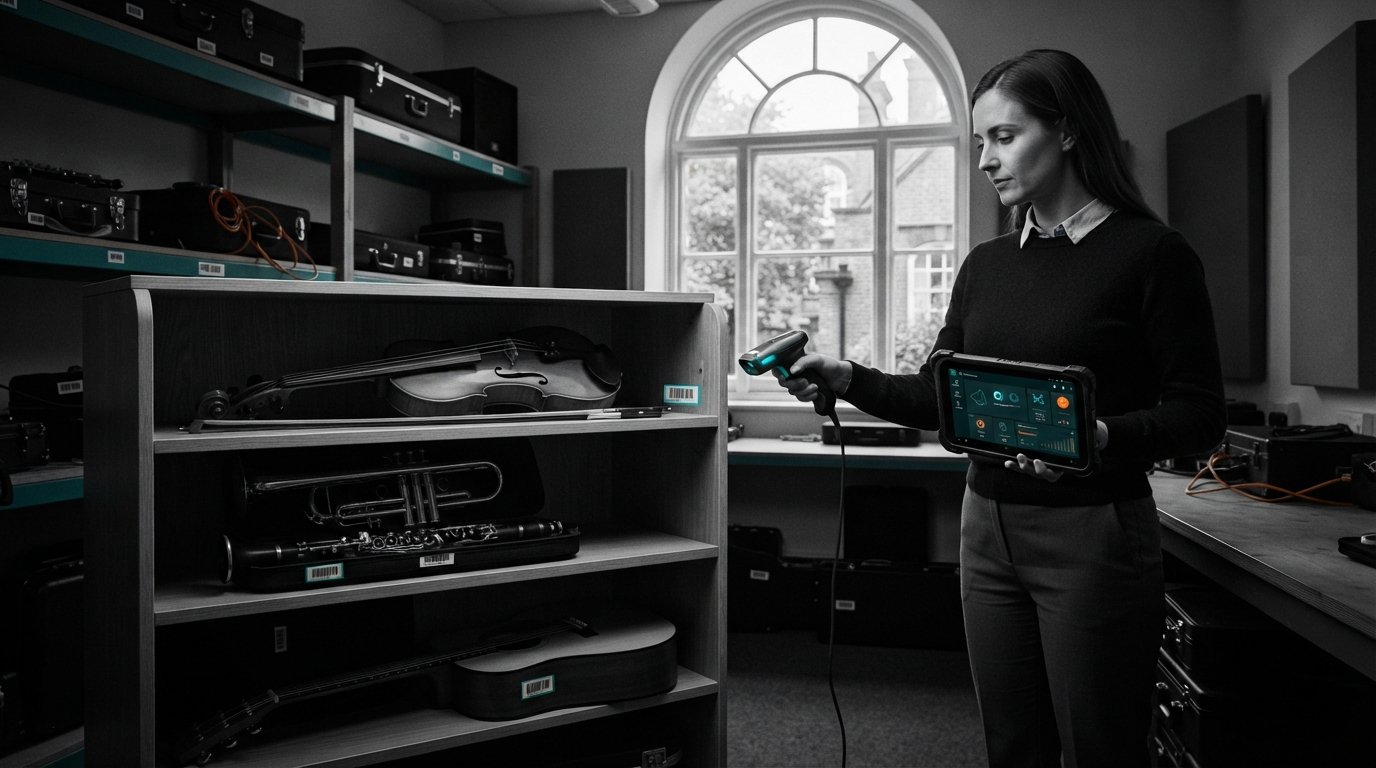
Managing school music inventories manually causes up to 20% in lost items annually, whilst modern barcode systems cut tracking administrative time by 75%. Dedicated asset tracking for school musical instruments protects valuable gear and streamlines student allocations, so you can decide when spreadsheets still work and when a modular cloud system earns its place.
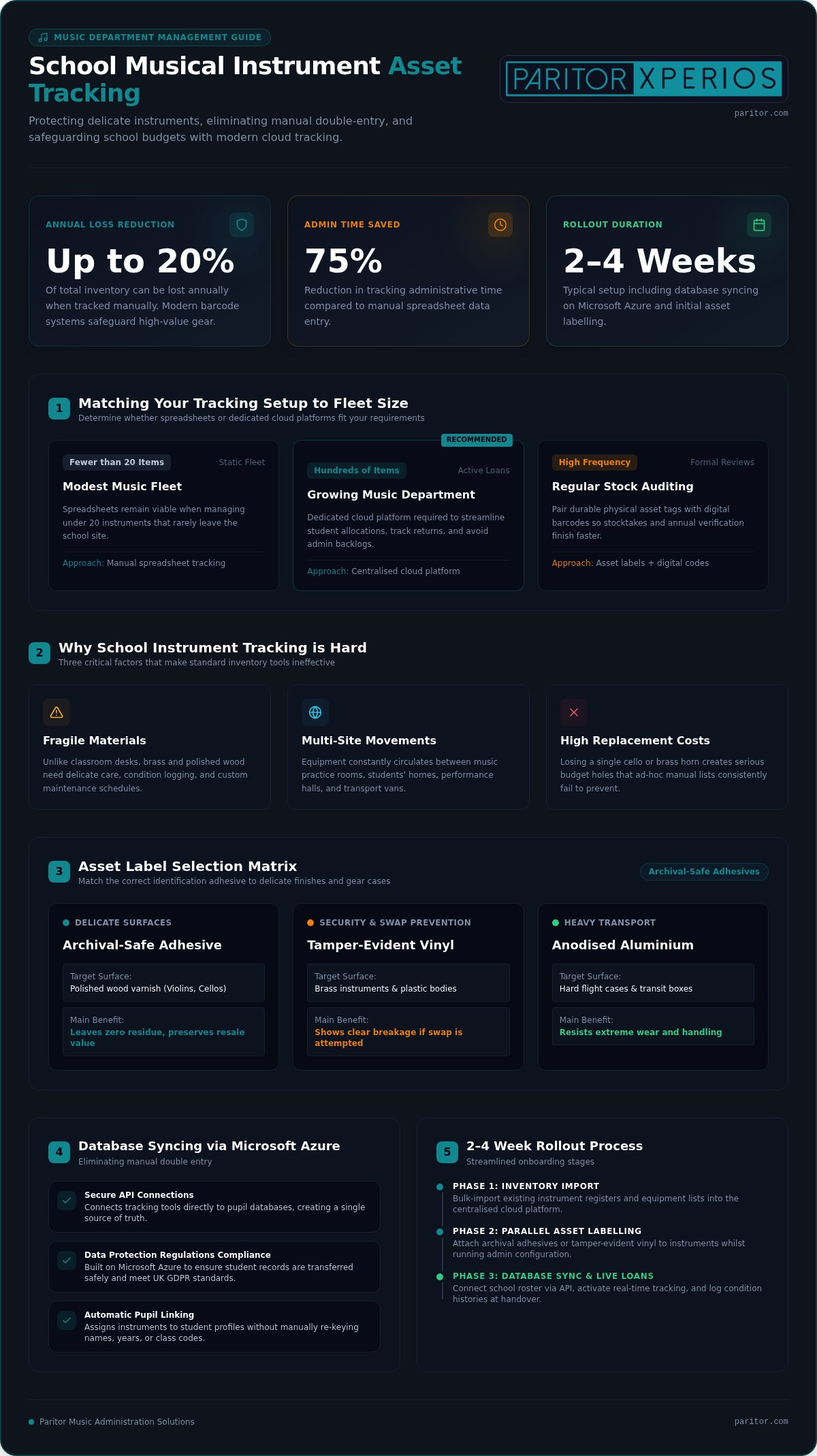
Key Takeaways: Modern asset tracking for school musical instruments uses archival-safe labels and cloud software to reduce annual inventory loss by up to 20%.
- Barcode systems reduce administrative tracking time by 75% compared to manual spreadsheet entry.
- Skip it when managing fewer than 20 instruments that rarely leave the school site.
- Use archival-safe adhesives for polished wood and tamper-evident vinyl for brass or plastic surfaces.
- Implementation typically takes two to four weeks including database syncing via Microsoft Azure.
Match your instrument tracking setup to fleet size and audit frequency
Your choice of inventory system depends on fleet size and administrative needs. Three common situations point to a clear next step:
- A small music department with a modest fleet: basic spreadsheets can monitor hire agreements and day-to-day loans.
- A growing school with hundreds of items: move to a dedicated cloud platform so allocations, organized.
- Frequent formal audits: prefer durable physical asset labels paired with digital codes so stocktakes finish faster.
You should upgrade as soon as manual entry creates administrative delays. Deciding between physical asset labels (an instrument categorisation system) and digital codes depends on how often you audit. Read the comparison of asset tags for music services to select the identification method that fits your stock.
Automated tools give you a single source of truth for every violin or brass item. Paritor provides a centralised solution on Microsoft Azure to secure your data and free up teaching time. Request a personalised quote to see how modular software fits your budget and workflow.
Fragile materials and multi-site moves make instrument tracking hard
Tracking school musical instruments is tricky because materials are fragile, gear moves across multiple venues, and replacement costs run high.
When you manage school gear, equipment constantly moves between music rooms, students’ homes and concert halls. Traditional tools fail once stock is spread across locations. Unlike classroom desks, brass or wooden items need delicate care and custom maintenance schedules. High values mean losing a single cello opens a serious budget hole: situation (one missing high-value instrument), action (replace ad hoc without a reliable register), outcome (a gap that manual lists rarely prevent).
Standard spreadsheets cannot handle complex loan agreements, which is how items go missing. Using our Tuition Software provides a single source of truth for your inventory and connects item histories directly with pupil records. Managing gear needs a dedicated instrument categorisation system that logs exact condition at each handover. A modern cloud platform then streamlines every hire and return without re-typing the same fields.
Automated tracking protects budget lines you would otherwise spend on replacements, and an upgraded workflow keeps each valuable asset accounted for.
Asset labels that protect finishes while identifying every item
Non-damaging asset labels protect delicate wood finishes while keeping your school inventory secure and identifiable.
Heavy-duty vinyl can act as a protective second skin for brass, while delicate violin varnish calls for archival-safe removable adhesives. Security tags must safeguard equipment without lowering resale value. Public educational infrastructure still expects clear inventory accountability across learning assets, so identification has to survive daily handling. Tamper-evident stickers make it obvious if students try to swap tags between items.
| Label Type | Target Surface | Main Benefit |
|---|---|---|
| Archival-safe adhesive | Polished wood varnish | Leaves zero residue |
| Tamper-evident vinyl | Brass and plastic | Shows clear breakage |
| Anodised aluminium | Hard flight cases | Resists extreme wear |
You can log these identifier tags directly inside management software for music schools so each physical item links to its online hire record. The register then updates as soon as a tag is scanned or a loan is closed.
Proper tags reduce loss because replacing a stolen cello costs far more than labelling it correctly in the first place.
Sync tracking tools with school databases to end double entry
Modern tracking tools must connect directly with your existing school databases through secure application programming interfaces (APIs). That connection creates a single source of truth for student records, instrument management and inventory details.
Select software that automatically syncs with your central database: manual data entry creates unnecessary admin work and invites human errors. Systems built on Microsoft Azure support GDPR compliance while transferring student rosters safely, passing fresh information back and forth as rosters and loans change.
Using dedicated management tools such as Paritor lets music departments link each loan to the right pupil profile without re-keying names and class codes. By eliminating duplicate data entry, your administrative team saves hours every week and recovers time for teaching music.
What a two-to-four-week implementation actually involves
Deploying a cloud tracking platform usually takes two to four weeks.
Setup begins by importing existing inventory into a centralised system. Asset labels and initial administrative configuration run in parallel so you are not waiting on one before the other. Paritor software streamlines that path so inventory, pupils and loan rules land in one place.
Staff training requirements stay minimal because intuitive interfaces speed up learning. Most music administrators master creating a hire agreement within a single afternoon session. Public-sector operational work still favours structured, reliable digital transitions, which is why a clear import-and-train sequence matters more than a long project plan.
A modular system suits schools that want fast onboarding without paying for unused features. Ongoing support and software updates support long-term data security via Microsoft Azure hosting. Exact implementation costs depend on database size and custom options; ask for a personalised onboarding quote when you are ready to compare fees.
Five steps that streamline student instrument loans
A structured check-out workflow stops inventory loss before it starts, much as a well-run library desk keeps stock moving without guesswork.
Parents can approve a loan through digital sign-off in the platform, which removes paper chase from the critical path. Keep this sequence in place so your catalogue stays accurate:
- Verify inventory: Check asset labels on the casing to confirm serial details.
- Assign borrower: Link the item to the pupil record within Paritor.
- Issue agreement: Send digital terms for instant guardian signature.
- Log condition: Record existing cosmetic wear prior to handover.
- Confirm check-out: Mark the item active so the system updates automatically.
Centralised tracking removes missing serial numbers from the weekly scramble and keeps teaching staff focused on music education. When you want the same flow across sites, book a short walkthrough with the team.
When dedicated asset tracking for school musical instruments is the wrong choice
A basic spreadsheet suffices for small primary schools managing fewer than twenty instruments. If your department rarely sends gear off-site, a simple paper register or local sheet works well. Smaller setups do not need a full cloud platform on day one.
Manual record-keeping is enough while the fleet stays tiny and on-site. Once inventory expands across multiple sites, manual entry causes administrative delays, and lost items quickly outweigh the low cost of free logbooks.
For growing departments, dedicated systems streamline instrument management while protecting student data. Smaller music services can stay on basic paper forms until physical inventory outgrows manual checks. Choose the tool that matches your scale rather than the largest feature list on the market.
Reporting tools that strengthen music grant and insurance applications
Detailed valuation reports and digital audit trails give UK funding bodies and insurance providers the evidence they expect.
Logging asset labels beside the exact condition of each piece turns your register into a clear history for every item. When you apply for grants, verified records show precisely how capital will support students. Centralised data also simplifies insurance claims if damage occurs, because you can produce condition notes and loan history without rebuilding a spreadsheet under pressure.
Automated reporting lifts repetitive admin off your team so more of the week goes to teaching. Compare UK pricing models for music schools when you want flexible Paritor options against your budget.
Frequently asked questions
Why is instrument tracking complicated?
Managing gear across multiple schools involves thousands of items moving between students, peripatetic staff and repair shops daily. Paper systems fail because records quickly become outdated, leaving music services unsure where specific items are located.
What problems arise from manual tracking?
Manual spreadsheets lead to lost inventory, missing fees and endless administrative chasing for returning instruments. Without an automated system for school instrument stock, staff waste valuable teaching time searching through inaccurate records.
Which identification method suits music service instruments?
Choice depends on surface and audit needs: archival-safe adhesives suit polished wood varnish, tamper-evident vinyl suits brass and plastic, and anodised aluminium suits hard flight cases. Pair the label with a digital register so each tag points to condition notes and the current borrower.
What training is required for staff?
Minimal training is needed because the interface is designed for busy education staff and music tutors. Your team is guided through the basic asset-label tools so everyone can issue and return items with confidence.
Can the system help with grant applications?
Yes, accurate inventory reports created by Paritor software provide clear evidence of resource usage and funding needs. A single source of truth makes pulling asset values and loan statistics straightforward for official application forms.
Next steps for your music service
Effective asset tracking for school musical instruments protects valuable gear while freeing teaching hours in 2026: the same decision you faced at the start (spreadsheet versus dedicated platform, label type, and database sync) now closes with a clear path to accurate stock and calmer admin.
Updating hire and return records helps maintain accurate stock levels across your region. A reliable cloud register removes administrative headaches by automating inventory updates and maintenance schedules, and consistent asset labels keep every cello, violin and trumpet accounted for year after year.
The Paritor team builds software solutions like Xperios to streamline daily operations for UK music services. Contact our advisers today for a tailored quote for your organisation.