
Imagine the start of a busy autumn term, and you’re staring at a spreadsheet that says a Grade 6 flute is in stock, but the shelf is empty. It’s a frustratingly common scene for music services across the UK, where manual tracking leads to lost assets and hours of wasted admin. You’ve likely felt the pressure of missing hire agreements or the mystery of an instrument’s unrecorded repair history. Relying on fragmented systems isn’t just a headache; it’s a direct threat to your budget. To regain control, many organisations are moving towards dedicated instrument maintenance tracking software to provide the professional framework required for absolute precision.
We understand that your primary mission is education, not paperwork. This guide explores how to build a centralised digital database that automates hire agreements, tracks repair histories, and ensures a clear audit trail for insurance purposes. We’ll show you how to gain real-time visibility over your entire inventory, turning a chaotic storeroom into a streamlined, high-performance asset library. It’s time to reclaim your schedule and focus on the creative growth of your students while the technology handles the heavy lifting behind the scenes.
Key Takeaways
- Understand the fundamental shift from reactive asset tracking to a proactive digital framework designed specifically for the complexities of educational music services.
- Learn how to establish total visibility over your stock by implementing a rigorous physical audit and a precise barcoding strategy for every instrument.
- Discover how to eliminate manual errors and ensure 100% signature compliance by utilising instrument maintenance tracking software to automate hire agreements.
- Protect your investment and ensure institutional safety by digitising repair logs and scheduling mandatory compliance tasks such as PAT testing.
- Explore the benefits of a centralised ecosystem that seamlessly integrates your inventory with student records, scheduling, and financial invoicing to reclaim administrative time.
What is Instrument Inventory Management for Music Services?
For a local music hub or peripatetic service, inventory management isn’t about selling products. It’s about maintaining a circular lifecycle that begins at acquisition and ends only when an instrument is finally decommissioned. This educational framework requires tracking every asset through years of loans, repairs, and transfers between schools. Whilst retail systems focus on the point of sale, music services need a system that manages the middle of the journey. Centralised visibility is the foundation of a successful hub, allowing you to see exactly where your assets are at any given moment.
Poor management leads to more than just missing violins. It results in financial leakage when hire fees aren’t collected and potential insurance invalidation if your asset register doesn’t match your physical stock. Administrative burnout is also a real threat. Staff shouldn’t spend their weekends reconciling paper forms and emails. Transitioning to a professional digital framework provides the relief your team needs to focus on teaching rather than hunting for lost clarinets.
The Complexity of Large-Scale Musical Assets
The Complexity of Large-Scale Musical Assets
Many services start with a basic spreadsheet, but this manual approach inevitably fails once an inventory exceeds 100 items. Data entry errors multiply, and version control becomes impossible. Inventory management software provides a single source of truth where every department sees the same real-time data. Adopting dedicated instrument maintenance tracking software ensures that your digital records actually reflect the physical reality of your store cupboard. This technology allows you to move from reactive firefighting to proactive management. Instrument inventory management is the digital synchronisation of asset tracking, student data, and financial records.
Establishing a Digital Foundation for Total Asset Visibility
To build a robust system, you must first clear the administrative fog that surrounds large collections. This begins with a structured transition from paper-based records or fragmented spreadsheets to a secure digital environment. Effective asset tracking isn’t just about knowing what you own; it’s about understanding the health, location, and history of your inventory at all times. By following a logical implementation process, you can transform your stores into a high-performance resource.
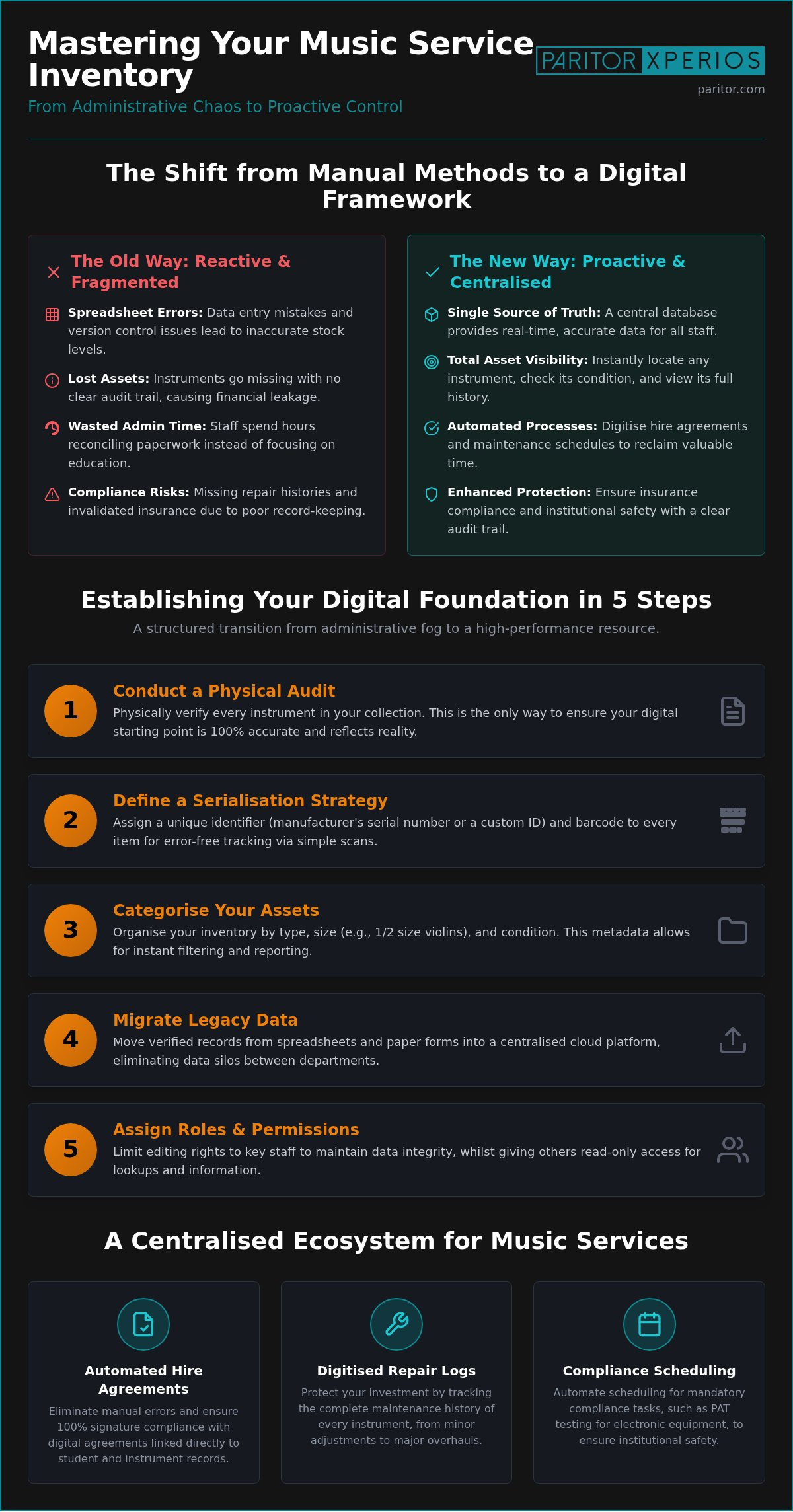
Follow these five steps to establish your digital foundation:
- Step 1: Conduct a physical audit. Lay hands on every item in your collection. This is the only way to ensure your digital starting point is 100% accurate and reflects physical reality.
- Step 2: Define a serialisation strategy. Every item needs a unique identifier. If an instrument lacks a manufacturer serial number, assign a custom hub ID to ensure it can be tracked individually.
- Step 3: Categorise your assets. Organise instruments by type, size (such as 1/2 size violins), and current condition. This metadata allows for instant filtering during busy recruitment periods.
- Step 4: Migrate legacy data. Move your verified records into a centralised cloud platform. This eliminates the “data silos” that often occur when different departments keep their own lists.
- Step 5: Assign roles and permissions. Limit editing rights to specific staff members to maintain data integrity whilst allowing others read-only access for lookups.
The Power of Serialisation and Barcoding
Barcoding is the most effective way to eliminate human error during the frantic term-time distribution. Instead of typing long serial numbers, staff simply scan a tag to assign an instrument to a student record. This is particularly useful for managing “kits,” where you can track a violin, its bow, and its case as a single unit whilst maintaining the ability to swap components if a bow needs rehairing. Utilising mobile technology allows your team to perform quick inventory scans in school cupboards without needing a laptop, making field audits significantly faster.
Cloud-Based Data Management
A cloud-based approach ensures that peripatetic teachers and administrators have real-time access to the database from any location. Whether they’re in a school hall or the central office, the information remains consistent and reliable. This level of connectivity is vital for institutional safety, ensuring your data is backed up on secure servers like Microsoft Azure. For a deeper look at how these systems integrate with wider hub operations, read The Complete Guide to Music Service Management Software in 2026. Adopting specialised instrument maintenance tracking software built on 30 years of industry experience turns a static list into a dynamic, time-saving tool.
Optimising the Instrument Hire and Loan Lifecycle
Managing the lifecycle of a hire instrument is often where the most significant administrative friction occurs. It’s not just about the physical handover; it’s about the legal and financial obligations that follow. By integrating your student records directly with your asset database, you create an instant lookup system that eliminates the need for cross-referencing multiple files. This synchronisation ensures that you always know who has what, for how long, and whether the associated fees are up to date.
Streamlining Hire Agreements
Paper-based hire agreements are notoriously difficult to track. They get lost in school bags or sit unsigned on kitchen tables for weeks. Moving to digital signatures removes this paperwork burden entirely for parents and staff. When you use dedicated instrument maintenance tracking software, the system can automatically trigger a digital agreement the moment an instrument is assigned to a student. This ensures 100% signature compliance before the instrument even leaves the building. Automated reminders then handle the heavy lifting of chasing overdue returns or unpaid fees, allowing your team to step away from the role of debt collector.
Managing Subsidies and Financial Tiers
UK music hubs often operate complex pricing models that include subsidies for Pupil Premium students or those on specific bursaries. Traditional retail software often fails here because it isn’t built for these educational nuances. Professional systems allow you to apply inventory management best practices by linking financial tiers directly to the student record and the specific asset. This means termly billing and automated invoicing become background tasks rather than manual marathons.
A centralised system also provides the high-level financial reporting required by hub leads and local authorities. You can instantly see the total value of instruments on loan versus those in stock, providing a clear picture of your service’s reach and impact. For a more detailed look at these systems, consult The Ultimate Guide to Instrument Inventory Management Software for Music Services (2026). Closing the loop on the lifecycle is just as critical; identifying missing assets immediately upon the end of a term ensures your inventory remains accurate and ready for the next cohort of learners. Using instrument maintenance tracking software transforms the hire process from a logistical nightmare into a smooth, professional service.
Proactive Maintenance and Regulatory Compliance
Maintaining a vast collection isn’t just about knowing where a violin is; it’s about ensuring every asset is fit for purpose and safe for use. A proactive maintenance strategy protects your capital investment and ensures student safety. Transitioning from reactive fixes to a scheduled programme allows you to extend the lifespan of your stock and avoid the high costs of emergency repairs. When you use professional instrument maintenance tracking software, you move away from guesswork and towards data-driven decisions that preserve your budget.
Tracking Repairs and Maintenance
Implementing a digital repair log is essential for understanding the lifetime cost of your inventory. By recording every string replacement, bridge adjustment, or re-hair, you build a comprehensive history for every item. This data is invaluable for identifying “problem” assets; if a specific model of flute requires frequent servicing, you have the evidence needed to inform future purchasing decisions. Key features of a professional system include:
- Recurring Alerts: Set automated reminders for routine servicing of high-value brass and woodwind instruments to prevent long-term damage.
- Compliance Scheduling: Track mandatory safety tasks like PAT testing for digital keyboards, amplifiers, and PA systems to meet institutional safety standards.
- Status Management: Use “out of service” markers to prevent staff from accidentally booking out broken items, ensuring students only receive functional equipment.
GDPR and Data Security in the Cloud
GDPR compliance is a significant hurdle for music hubs, as inventory records are inevitably linked to sensitive student and parent data. Hosting your database on a secure, accredited platform like Microsoft Azure is non-negotiable for modern educational services. This ensures that your data is protected by enterprise-level encryption and redundancy whilst remaining accessible to authorised staff. Professional systems allow you to balance this accessibility with strict privacy controls, ensuring peripatetic teachers see only what they need whilst administrators maintain full oversight.
Building a clear audit trail is the final piece of the compliance puzzle. You need to know exactly who accessed or modified an asset record to meet regulatory requirements. This level of transparency makes preparing for annual audits a simple task of generating a report rather than a weeks-long manual search through filing cabinets. To see how these modules work in practice, you can explore the specialised Xperios Instrument Management module, which was developed specifically to handle these complex regulatory burdens. By digitising your compliance and maintenance logs, you reclaim your time and focus on providing the best possible musical opportunities for your learners.
Modernising Your Inventory with Xperios
Adopting a professional digital framework is the final step in moving from administrative chaos to operational excellence. Xperios Instrument Management is a module built specifically for the unique demands of large-scale music services and hubs. Unlike generic retail systems that focus on one-off sales, our platform manages the entire circular journey of an educational asset. It serves as the industrious engine behind the scenes, allowing your team to step away from the spreadsheet and return to their primary creative mission.
The true power of the system lies in its seamless integration. Your inventory does not exist in a vacuum; it is intrinsically linked to your teaching schedules and financial workflows. When an instrument is assigned to a student, the system automatically updates the loan record, triggers the hire agreement, and prepares the termly invoice. This level of automation is designed to reduce administrative overhead by up to 50%, providing significant relief for busy office teams. By synchronising these modular components, you ensure that no asset is lost and no fee goes uncollected.
Empowering your frontline staff is equally vital. Through the Xperios Teacher Portal, peripatetic staff gain real-time visibility of stock availability directly from their mobile devices. They can check if a 3/4 size cello is available whilst still in the classroom, providing immediate answers to parents and students. This transparency fosters a sense of partnership and trust across the entire organisation, ensuring that everyone from the warehouse manager to the visiting tutor is working from the same single source of truth.
Why Xperios is the Industry Standard
Our platform is not just a software product; it is a collaborative solution built on 30 years of industry experience. We have developed every feature based on direct feedback from UK music hubs and conservatoires, ensuring we address the specific frustrations of your sector. The infrastructure is fully scalable, meaning it grows alongside your organisation whether you manage 500 or 5,000 assets. We also provide dedicated support and onboarding to handle complex data migrations, ensuring your transition to digital instrument maintenance tracking software is smooth and secure.
Next Steps for Your Organisation
Modernising your service requires a clear plan and the right technology partner. Preparing your team for the transition involves auditing your legacy data and defining your new digital workflows. We invite you to request a tailored demonstration of the Xperios platform to see how these modules can be customised for your specific needs. Modernise your music service today with Xperios and reclaim the time you need to focus on the future of music education.
Securing the Future of Your Music Inventory
Managing a vast musical collection doesn’t have to be a recurring source of administrative burnout. By establishing a secure digital foundation, you reclaim the time needed to focus on your core educational mission. We’ve explored how total asset visibility and automated hire lifecycles eliminate manual errors whilst protecting your service from financial leakage. Integrating proactive maintenance logs ensures your inventory remains safe, compliant, and ready for every student. Implementing dedicated instrument maintenance tracking software is the most effective way to protect your capital investment and simplify complex hub operations.
Trusted by leading UK music services, Xperios is built on 30 years of industry expertise and offers GDPR compliant, ISO 27001 standard security. It’s time to empower your team with a system designed specifically for the nuances of music education. Request a personal demonstration of Xperios Instrument Management to see how our collaborative framework can transform your workflow. You’ve built a successful service; now it’s time to give it the industrious engine it deserves to thrive.
Frequently Asked Questions
How do I start transitioning from a spreadsheet to instrument maintenance tracking software?
Start by conducting a physical audit to ensure your current stock data is accurate before migration. Once verified, you can import your existing spreadsheet directly into a centralised platform to eliminate data silos. This process ensures every staff member works from a single source of truth. Our team provides dedicated support to help you map your legacy data fields correctly, ensuring a smooth transition that immediately reduces your administrative burden.
Can I track instrument repairs and maintenance schedules in Xperios?
Yes, Xperios includes a specialised module for recording repair logs and scheduling recurring maintenance tasks. You can track the lifetime cost of every asset by logging damage types and repair fees. The system also allows you to set automated alerts for high-value brass and woodwind servicing or mandatory PAT testing for electrical equipment. This proactive approach ensures your inventory remains safe for students and helps you identify assets that require frequent attention.
Is instrument inventory management software GDPR compliant?
Professional instrument maintenance tracking software is built with strict data privacy controls to ensure full GDPR compliance. When hosted on secure platforms like Microsoft Azure, your student and parent data is protected by enterprise-level encryption. The system maintains a detailed audit trail of who accessed or modified specific records, providing the transparency required for institutional safety. This setup allows you to balance accessibility for peripatetic teachers with the rigorous security standards expected by schools.
How does barcoding work for musical instruments in a school setting?
Barcoding involves assigning a unique ID tag to every instrument, which can then be scanned using mobile technology. During busy term-time distribution, staff simply scan the tag to instantly link an asset to a student record in the database. This method significantly reduces manual data entry errors and speeds up the checkout process. You can even track kits, such as a violin, bow, and case, as a single unit whilst maintaining the ability to swap individual components.
Can parents sign hire agreements digitally through a portal?
Parents can complete and sign hire agreements entirely through the Xperios Parent Portal. This digital workflow removes the need for paper forms that often get lost in school bags. Once a parent signs, the agreement is automatically linked to the student record and the specific instrument assigned. This ensures 100% signature compliance and provides a clear digital audit trail for insurance purposes, whilst also triggering any necessary automated invoicing for hire fees.
What happens if an instrument is lost or stolen?
If an asset is lost or stolen, you can instantly update its status in the centralised database to reflect this change. The system maintains a history of the last known student assignment and the signed hire agreement, which is essential for insurance claims and police reports. Having this information readily available ensures you can follow your organisation’s recovery or replacement procedures without searching through physical filing cabinets or outdated spreadsheets.
Does Xperios integrate with my existing accounting software?
Xperios is designed to integrate seamlessly with various financial management systems to streamline your termly billing. The software synchronises your inventory records with your invoicing workflows, ensuring that hire fees are accurately calculated based on student subsidies or bursaries. This connectivity reduces the need for manual data entry between departments, creating a more efficient financial audit trail. It allows hub leads to see real-time revenue reports alongside their physical stock levels.
How long does it take to set up a large instrument inventory system?
The setup timeline depends on the size of your collection and the quality of your existing data, but most services can be operational within a few weeks. The initial physical audit and barcoding phase usually takes the most time. Once your data is imported into the cloud-based platform, your team can begin using the system immediately. Our onboarding specialists work closely with you to ensure your staff are trained and confident before the new term begins.